
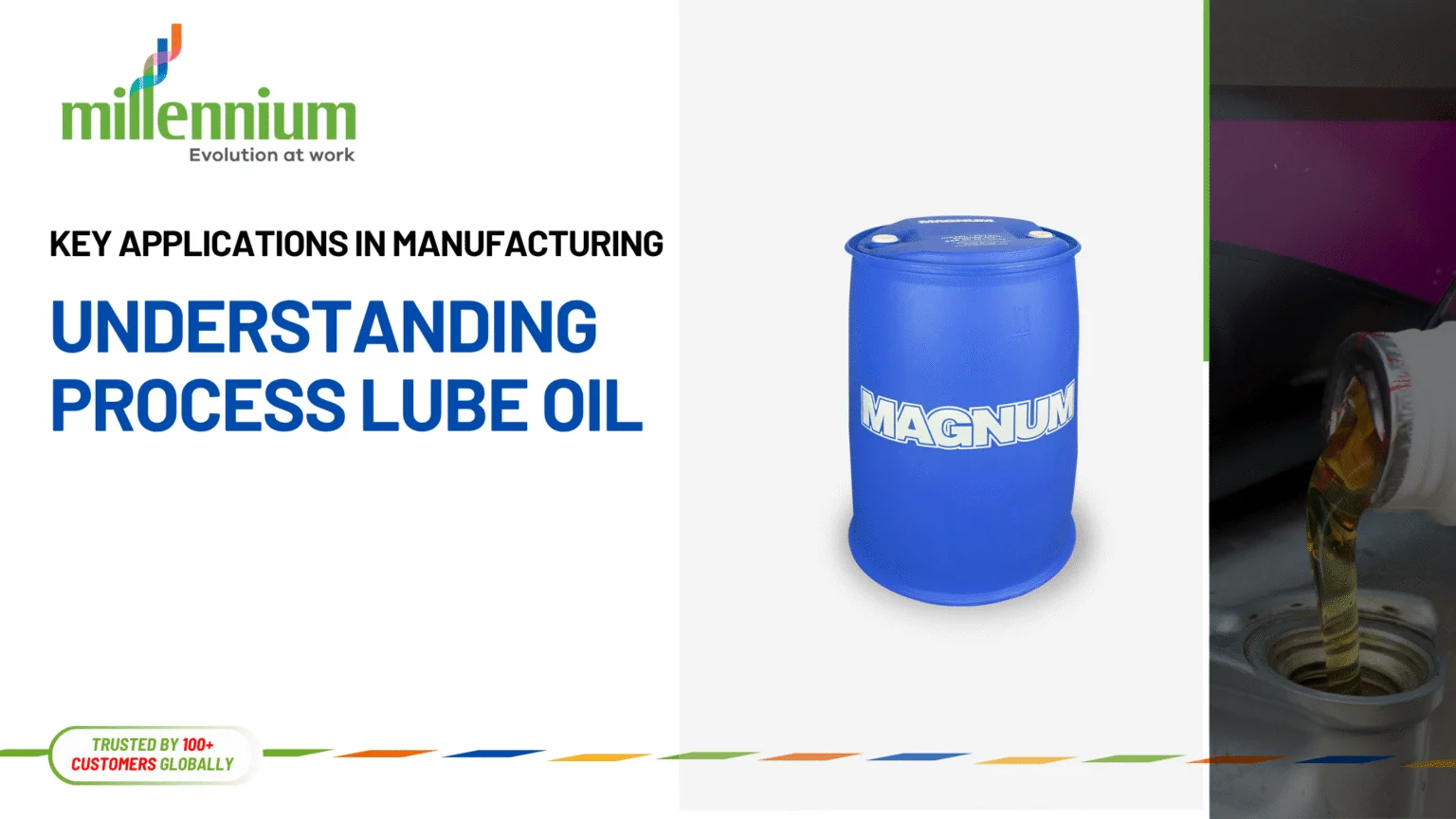
In modern manufacturing, smooth operations depend not only on advanced machinery but also on specialized fluids that quietly keep processes running efficiently. One such essential fluid is Process Lube Oil (PLO). Unlike conventional lubricants designed mainly to reduce friction between moving parts, process lube oil plays a broader role in manufacturing—supporting material processing, improving product quality, and enhancing operational consistency. From rubber and plastics to textiles and chemicals, process lube oil is a critical yet often underestimated component of industrial production.
So, What Is Process Lube Oil?
Process lube oil is a highly refined mineral or synthetic oil specifically formulated for use within manufacturing processes rather than purely for mechanical lubrication. It is designed to interact safely with raw materials, compounds, and finished products without negatively affecting their properties.
Process lube oils are typically colorless or light in appearance, low in odor, and chemically stable. They are produced with strict control over aromatic content, sulfur levels, and impurities, ensuring compatibility with sensitive manufacturing environments. Depending on the application, PLO may act as a plasticizer, processing aid, carrier fluid, or release agent, making it an integral part of production rather than just a support fluid.
Why It Works
The effectiveness of process lube oil lies in its controlled chemical composition and physical stability. It offers several performance benefits that make it suitable for demanding industrial processes:
-
Thermal stability, allowing it to perform under high processing temperatures
-
Chemical neutrality, ensuring it does not react with polymers, rubber compounds, or additives
-
Consistent viscosity, enabling uniform mixing and predictable processing behavior
-
Low volatility, which reduces evaporation losses and maintains product consistency
Because of these characteristics, process lube oil enhances processing efficiency while maintaining the integrity of the final product.
Where It’s Used
Process lube oil is used across a wide range of manufacturing sectors. Its versatility makes it a valuable ingredient in many production lines.
Rubber Manufacturing
In the rubber industry, process lube oil plays a vital role as a processing aid and plasticizer. It improves the flexibility and workability of rubber compounds during mixing, extrusion, and molding. By reducing internal friction within the compound, PLO helps achieve uniform dispersion of fillers like carbon black and silica.
Additionally, process lube oil contributes to improved surface finish, reduced energy consumption during processing, and enhanced durability of the final rubber product. Applications include tires, hoses, seals, gaskets, and conveyor belts.
Plastics & Polymers
In plastics and polymer processing, process lube oil helps control melt flow and improve mold release. It is often used in the production of PVC, thermoplastics, and elastomers to enhance flexibility and reduce brittleness.
By improving flow characteristics, PLO allows manufacturers to operate at lower processing temperatures and pressures, which helps protect equipment and improve productivity. It also supports consistent product appearance and dimensional stability in molded and extruded plastic components.
Textiles
The textile industry relies on process lube oil as a fiber lubricant and processing aid. During spinning, weaving, and knitting, PLO reduces friction between fibers and machine components, minimizing yarn breakage and improving production speed.
Process lube oil also helps control static electricity and improves fiber alignment, resulting in smoother fabrics and higher-quality finished textiles. Its clean-burning and low-staining nature makes it suitable for delicate fabrics and high-speed textile machinery.
Chemical Production
In chemical manufacturing, process lube oil is often used as a carrier fluid, reaction medium, or processing aid. Its chemical stability ensures safe handling of reactive materials while supporting controlled processing conditions.
PLO is commonly used in the production of adhesives, coatings, sealants, and specialty chemicals, where consistent viscosity and purity are critical. Its ability to blend well with additives and compounds makes it a dependable component in complex chemical formulations.
Other Cool Uses
Beyond core manufacturing sectors, process lube oil finds application in several other areas, including:
-
Mold release agents in industrial casting
-
Processing aid in pharmaceuticals and cosmetics (approved grades)
-
Surface treatment and finishing operations
-
Agricultural and construction material processing
These diverse uses highlight the adaptability of process lube oil across industries.
Why MAGNUM PLO Deserves a Shoutout
MAGNUM Process Lube Oil (PLO) is developed to meet the rigorous demands of modern manufacturing. Produced using high-purity base oils and advanced refining technology, MAGNUM PLO delivers reliable performance across multiple applications.
Key advantages include:
-
Excellent thermal and oxidation stability
-
Low aromatic content for safer processing
-
Consistent viscosity for predictable results
-
High compatibility with rubber, polymers, and chemicals
With dependable quality and performance, MAGNUM PLO helps manufacturers improve efficiency, reduce rejects, and maintain consistent product standards.
How to Store, Handle, and Blend Like a Pro
To get the best performance from process lube oil, proper handling is essential:
-
Store PLO in clean, sealed containers away from moisture and dust
-
Keep storage areas cool and shaded to prevent degradation
-
Use dedicated pumps and transfer lines to avoid contamination
-
Follow recommended blending ratios and mixing procedures
-
Regularly inspect oil clarity and consistency before use
Good storage and handling practices ensure long service life and optimal performance.
Final Take
Process lube oil is far more than a supporting fluid—it is a key contributor to manufacturing efficiency and product quality. By improving material flow, reducing friction, and supporting stable processing conditions, PLO plays a central role across industries such as rubber, plastics, textiles, and chemicals. High-quality solutions like MAGNUM PLO, combined with proper handling and application, empower manufacturers to achieve consistent results, lower operating costs, and superior product performance in today’s competitive industrial landscape.