Vitrified Tiles vs Porcelain Tiles: A Complete Comparison Guide
Choosing the right tiles for your home or commercial space is more than just a design decision. Tiles impact durability, maintenance, comfort, and long-term value. Among the many tile options available today, vitrified and porcelain tiles often create confusion for buyers. Both are popular, both look premium, and both promise durability—but they are not the same.
Understanding the difference between Vitrified Tiles vs Porcelain Tiles helps you make an informed decision based on your needs, budget, and space usage. In this guide, we will break down everything in simple language so you can confidently choose the right tile.
What Are Vitrified Tiles?
Vitrified tiles are manufactured by combining clay, silica, quartz, and feldspar. These materials are heated at extremely high temperatures, resulting in a tile with a glass-like surface. The vitrification process makes the tile dense, non-porous, and highly durable.
One of the biggest advantages of vitrified tiles is their polished appearance and uniform finish. They are widely used in residential and commercial interiors because of their aesthetic appeal and low maintenance.
Common types of vitrified tiles include double-charge, full-body, glazed vitrified tiles, and soluble salt tiles, each offering different design and durability benefits.
What Are Porcelain Tiles?
Porcelain tiles are a type of ceramic tile made from refined clay and fired at higher temperatures than regular ceramic tiles. This process results in a harder, denser tile with very low water absorption.
Porcelain tiles are known for their strength and resistance to moisture, stains, and heavy foot traffic. They are suitable for both indoor and outdoor use and can withstand extreme weather conditions.
These tiles often mimic the appearance of natural materials like stone, marble, and wood, making them a popular choice for modern and minimalist designs.
Key Differences Between Vitrified and Porcelain Tiles
Although vitrified and porcelain tiles may look similar, their composition and performance differ in important ways.
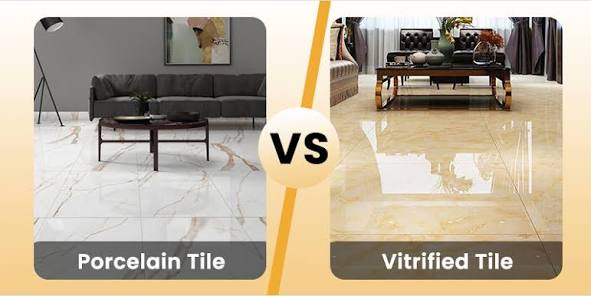
Vitrified tiles have a glass-like surface created through the vitrification process, which gives them a glossy and elegant look. Porcelain tiles, on the other hand, have a more natural and textured appearance, especially in matte finishes.
Porcelain tiles are generally harder and slightly more durable than vitrified tiles, making them ideal for high-traffic areas. Vitrified tiles excel in smoothness and shine, making them perfect for living rooms, bedrooms, and office spaces.
Durability and Strength Comparison
When it comes to durability, both tile types perform exceptionally well, but porcelain tiles have a slight edge. Their dense structure makes them highly resistant to scratches, cracks, and wear over time.
Vitrified tiles are also strong and long-lasting but may show surface scratches in areas with heavy movement or abrasive materials. For homes with normal foot traffic, vitrified tiles perform perfectly without any issues.
For commercial spaces, outdoor areas, or places exposed to heavy usage, porcelain tiles are often the safer choice.
Water Absorption and Moisture Resistance
Porcelain tiles absorb less than 0.5% water, making them almost waterproof. This quality makes them suitable for bathrooms, kitchens, balconies, and outdoor flooring.
Vitrified tiles also have low water absorption, but slightly more than porcelain. They are still moisture-resistant and work well in most indoor applications.
If your space is prone to moisture or humidity, porcelain tiles offer better long-term protection.
Design, Finish, and Aesthetic Appeal
Vitrified tiles are loved for their high-gloss finish and smooth surface. They reflect light beautifully, making rooms look bigger and brighter. This makes them a popular choice for modern homes and luxury interiors.
Porcelain tiles offer more variety in textures and finishes, including matte, rustic, stone-look, and wood-finish designs. They provide a natural and earthy look that suits both traditional and contemporary spaces.
Design preference plays a big role here—vitrified tiles are ideal for sleek interiors, while porcelain tiles suit natural and textured aesthetics.
Maintenance and Cleaning
Both tile types are easy to maintain compared to natural stone. Vitrified tiles require minimal effort to clean, as dust and stains do not settle easily on their smooth surface.
Porcelain tiles, especially textured or matte ones, may require slightly more effort during cleaning. However, they are highly stain-resistant and do not fade over time.
Regular sweeping and occasional mopping are enough to keep both tile types looking new for years.
Cost Comparison
Cost is often a deciding factor when choosing tiles. Vitrified tiles are generally more affordable and offer excellent value for money. They provide a premium look without significantly increasing the budget.
Porcelain tiles tend to be more expensive due to their high manufacturing standards, durability, and versatility. Installation costs may also be slightly higher because porcelain tiles are harder and require specialized cutting tools.
If budget is a concern, vitrified tiles are a cost-effective solution for most residential applications.
Best Areas to Use Vitrified Tiles
Vitrified tiles are best suited for living rooms, bedrooms, offices, showrooms, and indoor commercial spaces. Their glossy finish enhances interior lighting and creates a clean, elegant appearance.
They are also a good choice for kitchens and dining areas, provided proper installation and maintenance are followed.
Best Areas to Use Porcelain Tiles
Porcelain tiles are ideal for bathrooms, balconies, outdoor patios, parking areas, and high-traffic zones. Their resistance to moisture, stains, and temperature changes makes them extremely versatile.
They are also suitable for spaces where durability is more important than shine, such as corridors, staircases, and commercial entrances.
Which Tile Should You Choose?
The choice between vitrified and porcelain tiles depends on your specific needs. If you want affordability, elegance, and easy maintenance for indoor spaces, vitrified tiles are an excellent option.
If durability, moisture resistance, and long-term performance are your top priorities, porcelain tiles are worth the investment.
Understanding the real difference between Vitrified Tiles vs Porcelain Tiles allows you to match the tile to the purpose of the space rather than just the appearance.
Conclusion
Both vitrified and porcelain tiles offer unique benefits, and neither is universally better than the other. Vitrified tiles shine in interior aesthetics and budget-friendly projects, while porcelain tiles stand out for strength, versatility, and resistance.
By evaluating factors such as location, foot traffic, budget, and design preference, you can make a confident and practical choice. The right tile not only enhances your space visually but also adds long-term value and comfort to your home.