In modern industrial manufacturing, achieving strong, consistent, and precise metal joints is critical for productivity and product quality. Among resistance welding technologies, the projection welder has become a cornerstone solution for OEMs, automation integrators, and factory engineers seeking reliability, speed, and repeatable results. Heron Welder, a global leader in industrial welding equipment, offers advanced projection welding machines and systems tailored for a wide range of applications, helping manufacturers optimize their production lines.
What Is a Projection Welder?
A projection welder is a specialized resistance welding machine designed to join two or more metal sheets at predefined points, known as projections. Unlike spot welding, where current flows through flat surfaces, projection welding concentrates electrical energy on small raised features on one of the workpieces. These projections focus heat precisely where the weld is required, allowing for stronger and more controlled joints.
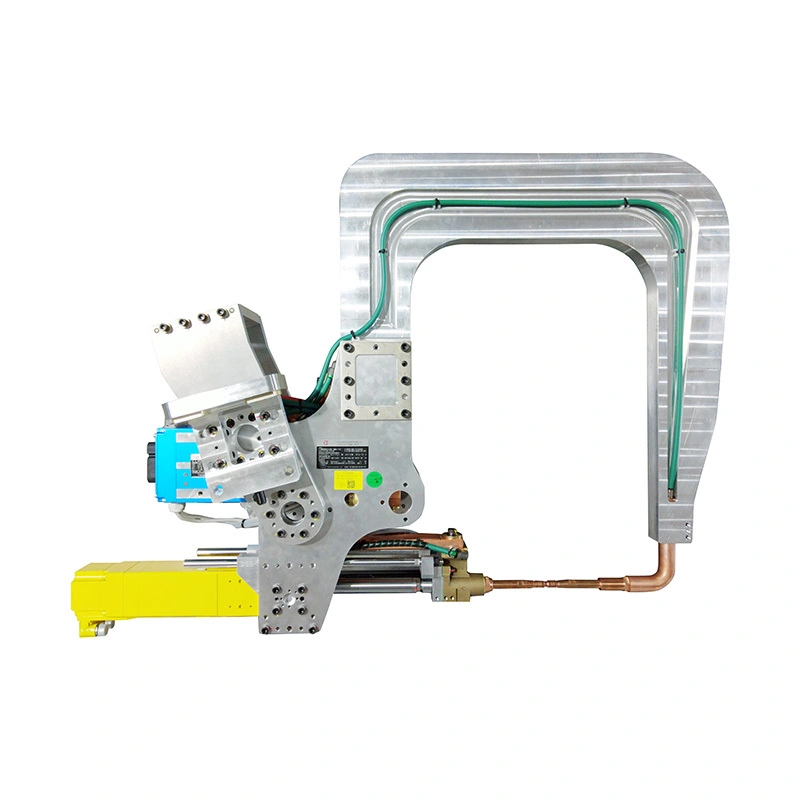
Key Components of a Projection Welder:
-
Electrodes: Deliver current to the projection points with precision.
-
Transformer or MFDC power source: Provides the necessary current for high-quality welds.
-
Clamping system: Secures components to ensure accurate alignment during welding.
-
Controller: Regulates current, pressure, and weld time to optimize the process.
Heron offers projection welders with advanced controllers and automation-ready designs, ensuring high repeatability and integration flexibility.
How Projection Welding Works
The projection welding process relies on the principle of resistance heating. When current passes through the projection area, the electrical resistance generates heat, causing the metal to melt locally and form a strong bond. Simultaneously, the electrodes apply pressure, consolidating the joint as it cools.
Step-by-Step Process:
-
Positioning: Metal sheets are placed in the fixture, aligning projections with electrodes.
-
Clamping: Electrodes press the workpieces together to ensure contact.
-
Current Application: High-intensity current passes through the projections.
-
Weld Formation: Projections melt under heat and pressure, creating a consistent weld nugget.
-
Cooling: Electrodes maintain pressure while the weld solidifies, ensuring strength.
This precision makes projection welding ideal for components requiring multiple, simultaneous welds without distortion.
Applications of Projection Welding
Projection welding is widely used across industries where speed, precision, and repeatable quality are essential. Typical applications include:
-
Automotive Industry: Welding nuts, bolts, and clips onto body panels or assembling battery packs.
-
Electrical Components: Joining terminals, connectors, and small sheet metal assemblies.
-
Appliance Manufacturing: Fastening components in HVAC units, washing machines, and refrigerators.
-
Aerospace & Defense: Joining lightweight alloys with minimal distortion.
Heron’s projection welders are optimized for high-volume manufacturing, offering both manual and automated configurations suitable for complex assembly lines.
Projection Welding vs. Spot Welding
While projection welding is a subset of resistance welding, it differs from spot welding in several key ways:
| Feature | Projection Welding | Spot Welding |
|---|---|---|
| Heat Concentration | Focused on projections | Spread across flat surfaces |
| Number of Welds | Multiple simultaneous welds possible | Typically one weld per electrode pair |
| Distortion | Minimal due to precise heating | Higher risk if sheets are thin |
| Applications | Nuts, clips, battery tabs, complex assemblies | Sheet joining, small panels, general fabrication |
| Automation Integration | High compatibility with robotic cells | Moderate, but less precise for multi-point welding |
For engineers seeking repeatable multi-point welds without compromising part geometry, projection welding often offers superior performance.
Best Practices for Projection Welding
Maximizing the efficiency and quality of projection welding requires attention to process parameters and machine configuration:
-
Projection Design: Ensure proper height and shape of projections for uniform heat generation.
-
Electrode Selection: Use electrodes that match the geometry and material to prevent wear and spatter.
-
Current & Time Optimization: Fine-tune welding current, pressure, and duration to prevent under- or over-welding.
-
Fixture Accuracy: Maintain precise alignment to achieve consistent welds across all points.
-
Regular Maintenance: Inspect electrodes, check power supply, and clean work surfaces for consistent performance.
Heron provides tailored guidance and advanced controllers to simplify parameter optimization, ensuring reliable and high-quality production results.
Why Choose Heron for Projection Welding Solutions
Heron Welder is recognized worldwide for delivering high-performance projection welding machines and integrated automation solutions. Our advantages include:
-
Global Expertise: Decades of experience serving OEMs and industrial manufacturers.
-
Customizable Machines: Manual, semi-automatic, or fully automated systems to suit production needs.
-
Advanced Controllers: Precise control of current, pressure, and timing for consistent weld quality.
-
Integrated Automation: Seamless robotic integration for high-speed production lines.
By choosing Heron, manufacturers can increase productivity, reduce scrap, and ensure robust, repeatable welds across high-volume assembly operations.
FAQs About Projection Welding
1. Can projection welding join different metals?
Yes, projection welding can join similar or dissimilar metals, provided the process parameters are optimized.
2. Is projection welding suitable for thin sheets?
Absolutely. Its localized heating minimizes distortion, making it ideal for thin metal sheets.
3. How does automation enhance projection welding?
Automation ensures consistent electrode positioning, precise weld timing, and high throughput, reducing human error.
4. What maintenance is required for projection welders?
Regular electrode inspection, power system checks, and cleaning of workpieces help maintain consistent weld quality.
5. Can Heron welders be integrated with robotic cells?
Yes, Heron’s projection welders are designed for seamless integration with robotic and automated assembly lines.
Conclusion
Projection welding is a proven solution for manufacturers seeking precision, efficiency, and reliability in multi-point metal joining. Whether it’s automotive components, electrical assemblies, or industrial appliances, Heron Welder offers state-of-the-art projection welding machines and automation-ready systems to optimize your production line.
Ready to enhance your welding processes? Contact Heron today to request a quote or consult with our experts on customized projection welding solutions for your factory or automated assembly line.