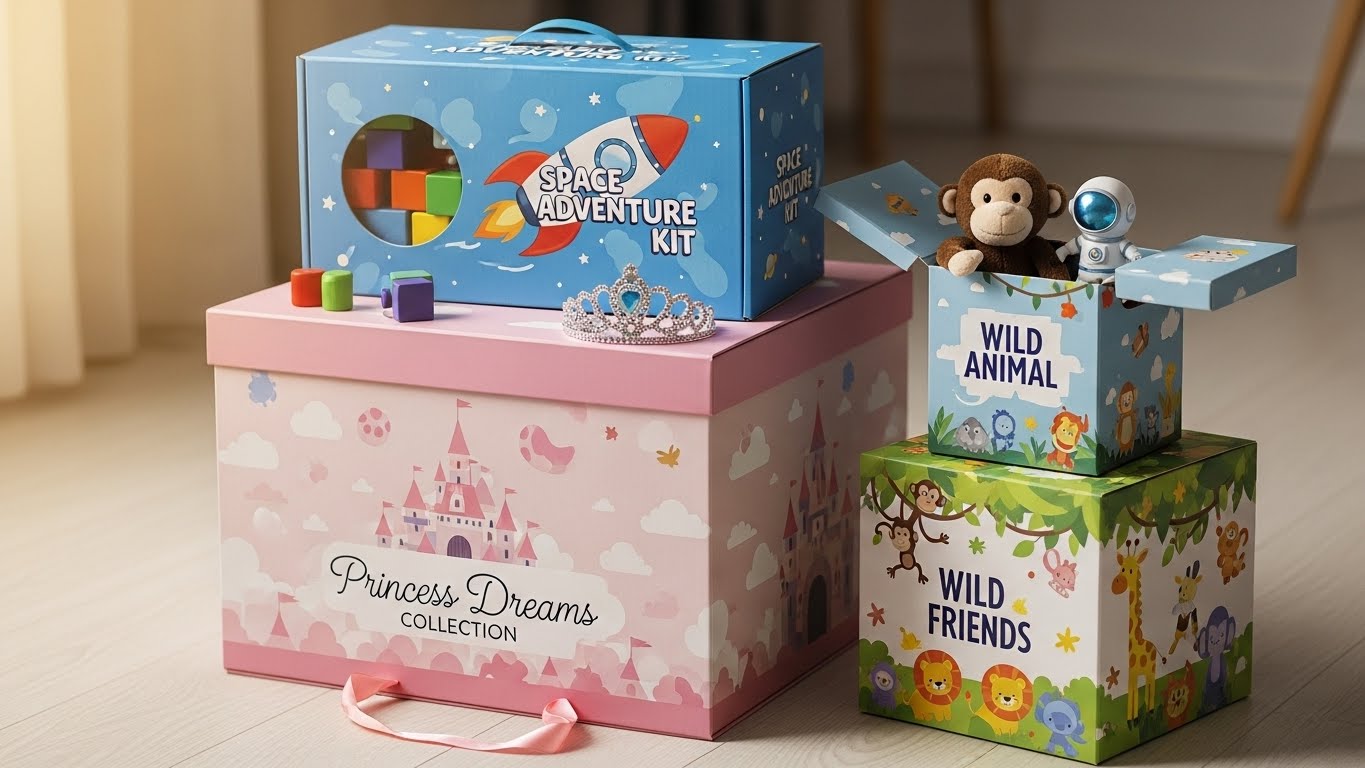
Colors are the first thing children notice when seeing toys on the shelf. Red, yellow, and blue catch a child’s eye, while soft shades are used for baby toys. Colors show the type of toy and suggest its purpose. Red may signal fun or energy, soft pink may show calm play. Parents notice colors too. Bright colors suggest activity, muted colors suggest safety. Children often link colors to happiness, which affects interest.
Designers think carefully about color to connect toys with children. The right color choices help toys stand out on the shelf. Some toy shelves in stores are crowded, and boxes with strong colors catch attention faster. Children often pull parents toward toys with colors they like. For example, a child may see a box with a bright green car and show excitement immediately. Choosing colors thoughtfully can make toys easier to sell.
What Role Does Shape and Structure Play in Toy Appeal?
The shape of the custom box changes how people see toys. Standard box shapes are common, but unique shapes make toys stand out. Custom printed toy boxes shaped like toys inside can create curiosity. The sturdy box shows the toy is safe and easy to handle. Kids enjoy boxes that open in fun ways, like flaps or compartments. Parents notice the strength of the box.
A mix of fun for children and strength for parents can influence buying. Some stores use creative shelf arrangements for shaped boxes, which makes toys more noticeable. A unique shape also helps children remember toys. For example, a rocket-shaped box for toy rockets can make a child excited to play even before opening the box. A good design of a box structure adds value to the toy without changing the toy itself.
How Important Are Visuals and Graphics on Custom Boxes?
Pictures and graphics on the box play a major role in buying. Drawings, photos, or characters catch child attention. Graphics explain toys quickly. A box showing building blocks in use helps children and parents understand play. Some boxes use moving graphics or interactive parts to attract attention.
Clear arrangement of graphics makes toys easy to understand. Colors, shapes, and images work together to tell the story of a toy. On crowded shelves, boxes with strong visuals sell faster. A visual story helps a child imagine playing with a toy. Graphics make toys memorable. For example, a box showing action figures fighting a small battle helps children imagine fun before opening the box.
Do Materials and Finish Affect Toy Perception?
The material of the box changes how buyers see toys. Strong cardboard gives a sense of durability, weak cardboard can make toys look cheap. Some boxes have textures children can touch, which adds curiosity. Shiny surfaces make colors clear, matte surfaces can suggest calm play.
Parents judge toy quality by the strength of the box. Recycled cardboard used in many boxes. Finish and material together show safety and reliability, which affects buying. A box that feels strong can convince parents about toy quality. Some stores even highlight the strength of the box to show value to buyers.
How Does Branding on Custom Boxes Influence Choices?
Branding changes buyer choice. Known brands show parents’ toys are safe. Logos, colors, characters help buyers recognize products. Repeated branding builds trust and loyalty. Children notice familiar characters and logos.
Branding tells a story and helps children connect to toys emotionally. Retailers often sell recognized brands faster. Branding can be simple with clear logos and colors, no need for extra design. Some children ask for toys because they see their favorite brand logo. Clear branding helps toys compete on the shelf.
Why Are Interactive Elements on Custom Boxes Effective?
Boxes with interactive parts attract attention. Windows showing toys, flaps, pop-ups, or compartments make children explore before buying. Children enjoy discovering surprises inside the box. Parents also see how toys work through interactive parts. Shelves with many toys make interactive boxes stand out. Engagement before opening increases interest. Box becomes part of play. For example, a small puzzle on a box cover can show a child some play possibilities. Interactive packaging helps you stay memorable and may influence repeat interest.
How Can Storytelling on Boxes Influence Buying?
Storytelling on the box makes the toy more engaging. Characters, scenes, or action shown on box help children imagine play. Doll boxes showing different scenes encourage creativity. Storytelling also helps parents see that toys can develop imagination. Some brands use short stories or character backgrounds to add interest. Story helps you feel bigger than the product. Children often connect with the story before holding the toy. Example: a castle box showing knights and dragons helps children imagine game scenarios. Storytelling makes packaging more than a box.
What Effect Do Custom Designs Have on Toy Popularity?
Custom box designs make toys different from others. Limited edition boxes, seasonal designs, and personal touches make toys more interesting. Designs match child interests, like animals, cars, or fantasy themes. Parents like special packaging. Small businesses and startups use custom boxes from UPacked to make unique designs. Custom boxes let businesses choose colors, pictures, and finishes. Unique designs make toys stand out on the shelf. Custom packaging shows toy personality and helps compete with big brands.
Why Are Safety and Eco-Friendly Printing Choices Important?
Parents care about safety. Packaging materials, inks, adhesives must be non-toxic. Toys for babies need safe boxes. Eco-friendly inks, recycled cardboard attract environmentally aware buyers. Safe materials build trust and can influence buying. Stores prefer products with safe and responsible packaging. Some boxes highlight eco-friendly features to show value. Printing choices matter as children often touch boxes. Safe printing ensures packaging does not harm children while creating interest.
How Does Shelf Placement and Retail Display Affect Toy Sales?
Placement affects buyer attention. Toys at eye level are easier for children to notice. Stores arrange toys to maximize visibility. Boxes that stand, show toys, or have clear designs sell faster. Retail Boxes that fit display properly attract buyers. Shelf placement with an appealing box can increase interest. Even simple toys may sell faster with better displays. Display and box design together affect child and parent choice.
Can Pricing and Perceived Value Be Influenced by Packaging?
Packaging can show the value of a toy. Strong boxes, clear layout can make toys seem higher quality. Parents often judge toys by box. Gift boxes with easy opening or firm surfaces add value. Plain boxes may suggest lower quality. A well-designed box can convince buyers of its value without changing the toy itself. Packaging acts as a silent message about toy quality.
How Do Seasonal and Themed Packaging Boost Toy Interest?
Seasonal or themed boxes create interest. Holiday boxes, movie tie-ins, or special collections encourage children to want toys. Boxes may show characters or small extras. Stores use seasonal boxes to attract buyers. Parents like special packaging for occasions. Seasonal boxes make toys feel different from normal toys. Some children ask for a holiday version of the same toy due to the box design. Creative seasonal packaging can increase sales.